

Stargazing Near San Diego: Julian's Dark Skies and the Best Meteor Showers to Plan a Trip Around
Some of the best stargazing near San Diego is barely an hour away, up in the mountains around Julian. While the coast glows under city lights and the marine layer rolls in, Julian sits high, dry, and genuinely dark. So dark, in fact, that it is a certified International Dark Sky Community. On a clear night you can see the Milky Way with your bare eyes, and during a meteor shower you can watch shooting stars cross the whole sky. Here is why the skies up here are so good, the meteor showers worth planning a trip around, and how to see them in comfort.
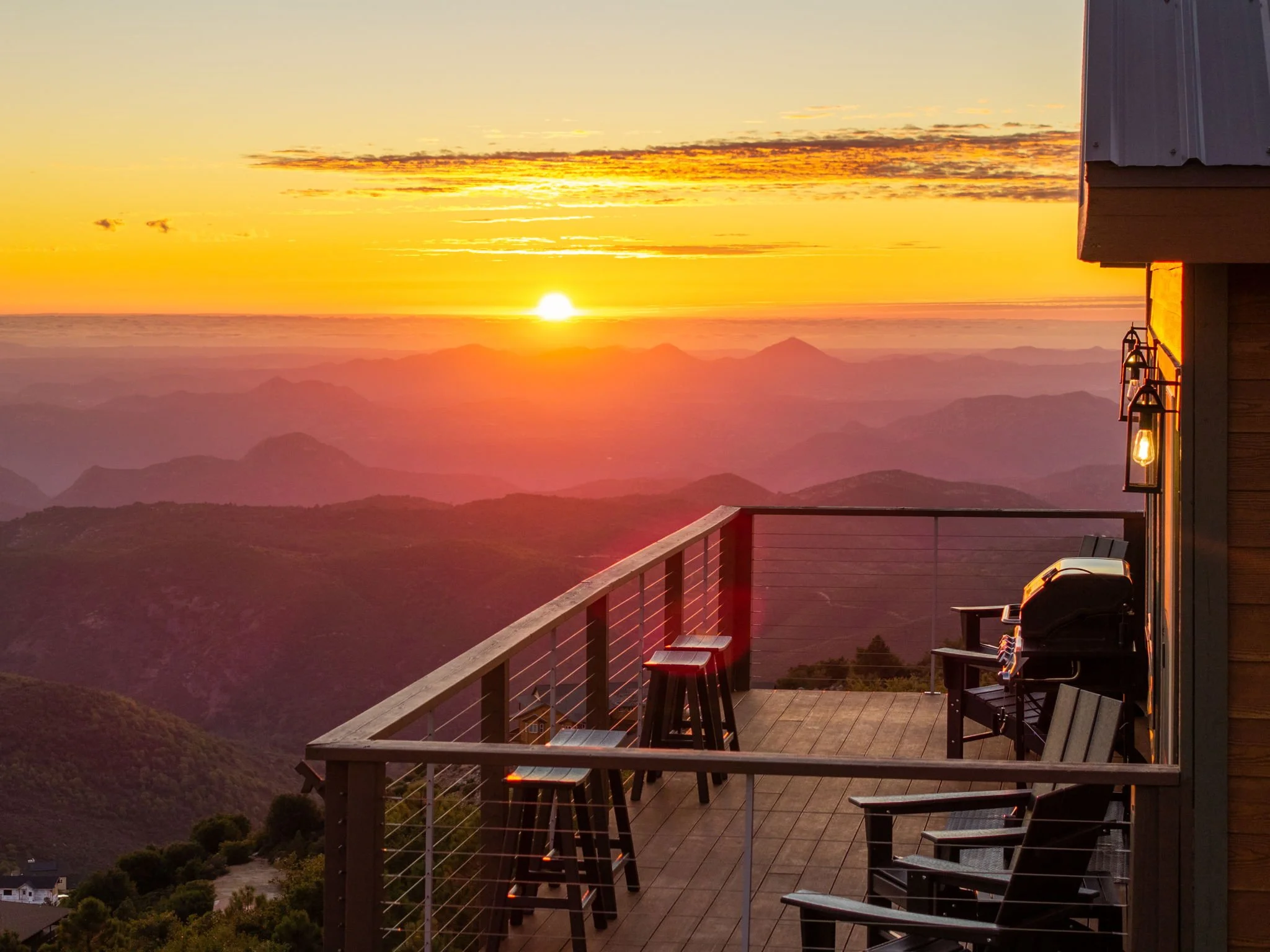
The sky views from the deck at our Julian property, Wild Moon Ranch
Why Julian has some of the darkest skies in Southern California
A few things come together to make Julian special for stargazing.
First, the designation. Julian is one of only a handful of certified International Dark Sky Communities in the state, which means the area actively protects its night sky from light pollution. That is not just a nice label. It is the difference between a washed-out gray sky and one full of stars.
Second, the geography. The town sits above 4,000 feet, and the surrounding ridges climb higher still, well away from the glow of San Diego and the coast. The air up here is dry and clear, and the cabins sit near Lake Cuyamaca and Cuyamaca Rancho State Park, surrounded by open space rather than streetlights.
Put it together and you get the kind of sky most Californians almost never see. The Milky Way overhead, planets bright enough to cast a mood, and meteor showers that actually look like something.
The best meteor showers to plan a trip around
The great thing about meteor showers is that they run on a schedule. They peak on roughly the same nights every year, so you can book a stay around one. Here are the showers worth building a trip around, with their approximate peak nights:
Quadrantids — early January. Short but intense, with bright fireballs.
Lyrids — mid-to-late April. A reliable spring shower.
Eta Aquariids — early May. Swift meteors with long trails.
Perseids — August 12 to 13. The summer favorite, on warm nights made for staying out late.
Orionids — around October 21. Medium strength, fast and bright.
Leonids — around November 17. Famous for occasional bursts.
Geminids — December 13 to 14. The strongest shower of the year, often more than 100 meteors an hour under a dark sky.
One to circle this year: the 2026 Geminids fall on a night with only a thin crescent moon that sets early, which means a truly dark sky right at the peak. That does not happen every year, and it makes this December one of the best times to come look up.
Peak nights and exact moon conditions shift a little year to year. For the current calendar, the American Meteor Society keeps a running meteor shower calendar you can plan around.
How to watch a meteor shower (no telescope required)
Meteor showers are the easiest astronomy there is. You do not need any equipment, just a dark sky and a little patience.
Go after midnight. Most showers are best in the early morning hours, from roughly 2 a.m. to dawn, when the sky is darkest and the radiant is highest. The Geminids are an exception and show well from about 10 p.m.
Let your eyes adjust. Give yourself 20 to 30 minutes away from any bright light, and keep the phone in your pocket. Your night vision is the only gear you need.
Look up, not at one spot. Meteors can appear anywhere. Lie back, take in as much sky as you can, and let them come to you.
Dress warm, or get in the hot tub. Mountain nights get cool, even after warm days. A blanket works. A cedar hot tub works better.
Pick a dark place. This is the whole game. The farther you are from city light, the more you see, which is exactly why Julian is worth the drive.
Where to stay: two cabins, two ways to watch
Both of our cabins sit high above Lake Cuyamaca, right under that protected night sky, and each gives you a different way to take it in.
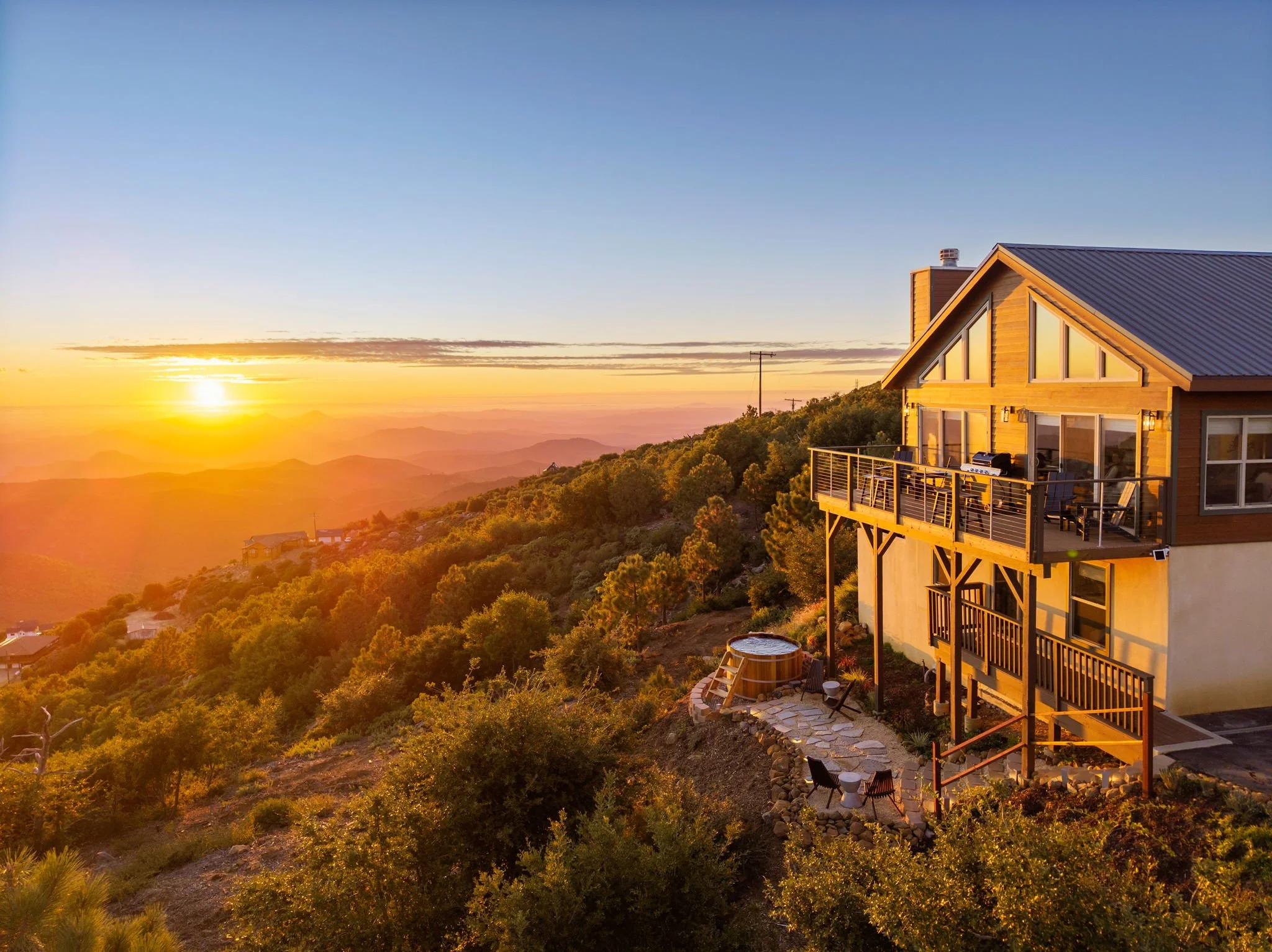
Wild Moon Ranch sits right on top of the ridge on two private acres, with panoramic, horizon-to-horizon views. The sky is wide open from every angle, and the cedar hot tub sits right under it, so you can soak in warm water and watch the whole show pass overhead. It sleeps up to nine, has a private pickleball court, and is built for gathering, a favorite for groups who want the entire sky and room to roam.
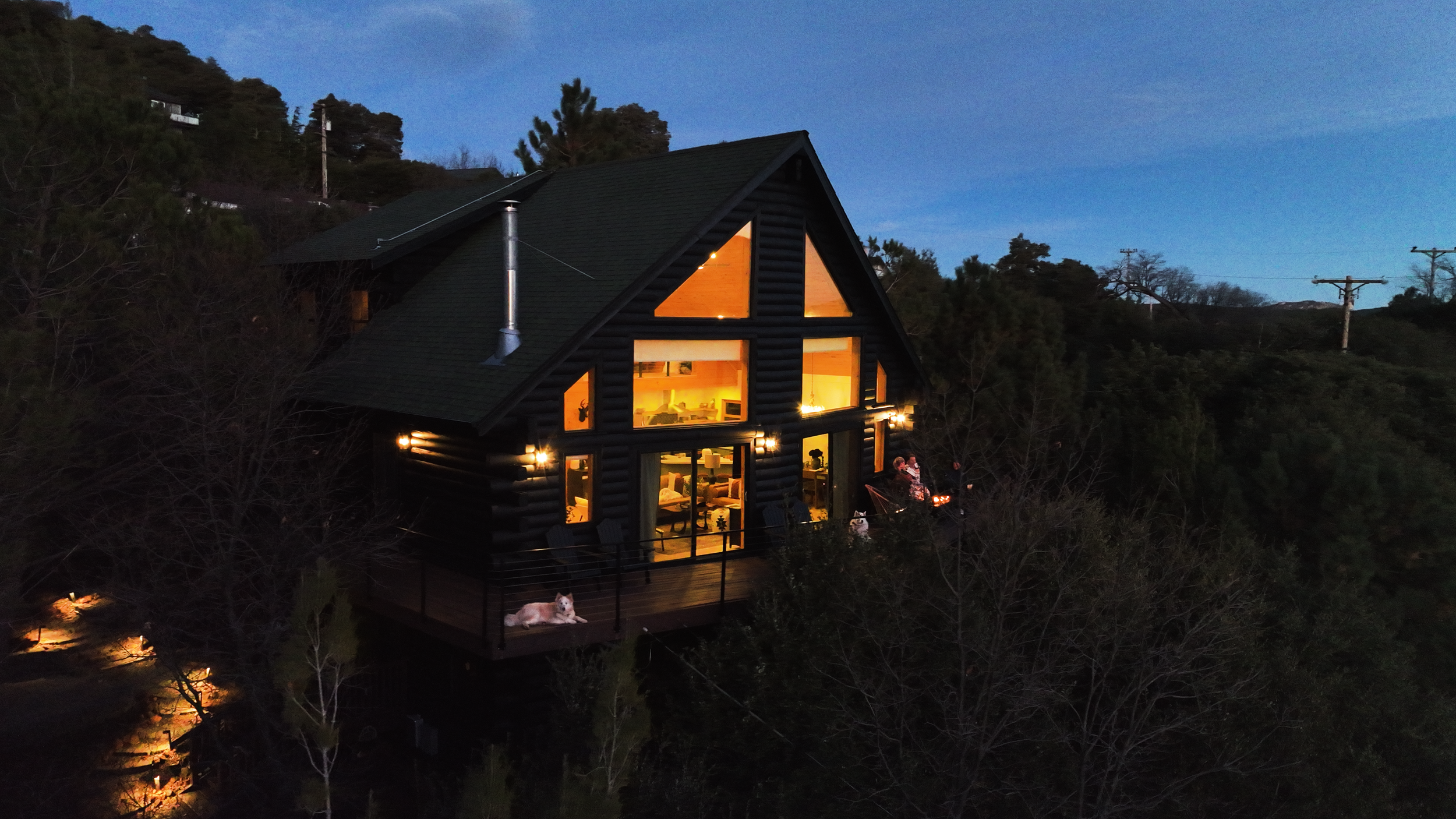
Dark Moon Chalet is a spacious log A-frame tucked into the pines, sleeping up to ten with plenty of room to spread out inside. Here you stargaze from the deck, your own quiet clearing framed by the trees, with the cedar hot tub waiting just off to the side. Fittingly named for a place with skies this dark.
Plan your stargazing getaway
Pick a meteor shower, pick a cabin, and book your dates. Peak nights and weekends fill up first, especially in December, so it pays to plan ahead.
A meteor shower is a naked-eye event, so no gear is needed. And for a closer look at the moon, Saturn's rings, or Jupiter's moons, there is a telescope at both cabins.
Book Wild Moon Ranch · Book Dark Moon Chalet
We will have the hot tub warm.

Dark Moon Chalet cedar hot tub under warm twinkle lights.